Yours alone
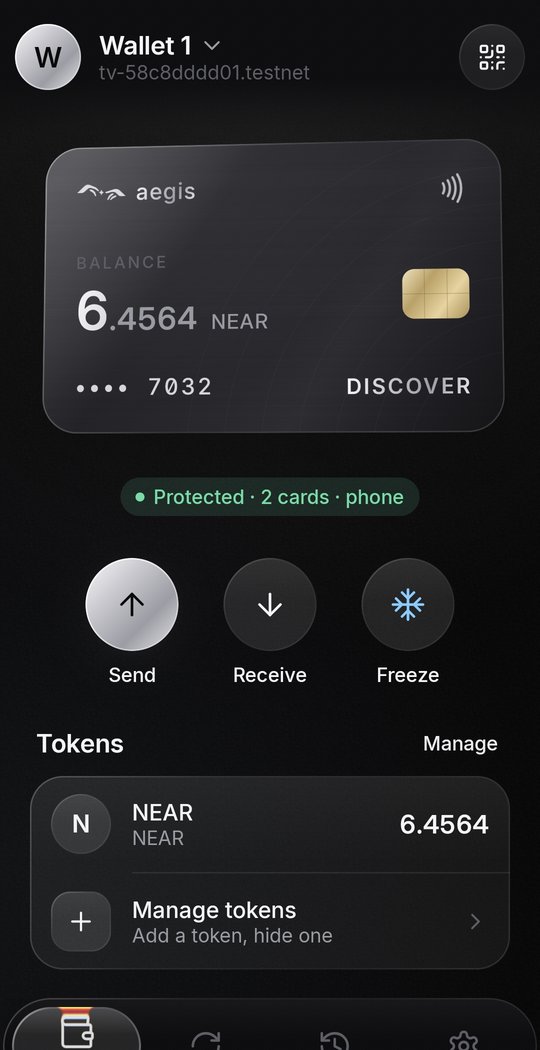
Your wallet is a smart contract on its own NEAR account. At the end of setup the account's key is deleted, so only your card and your phone, together, can move the funds. No company, Aegis included, can.
 aegis
Get the app
Self-custodial NEAR wallet
Aegis turns the contactless card already in your wallet and your phone's fingerprint into two keys. Every payment needs both. No seed phrase, no device to buy.
Your wallet is a smart contract on its own NEAR account. At the end of setup the account's key is deleted, so only your card and your phone, together, can move the funds. No company, Aegis included, can.
Hold your card to the back of the phone, then confirm with your fingerprint. The prompt shows exactly what you're approving.
No hardware wallet to buy, charge or lose. The chip on your bank card already holds a key that can't be copied out.
Nothing to write down and nothing to steal. Add a backup card you keep at home, or a guardian phone you trust, and recover on a new phone.
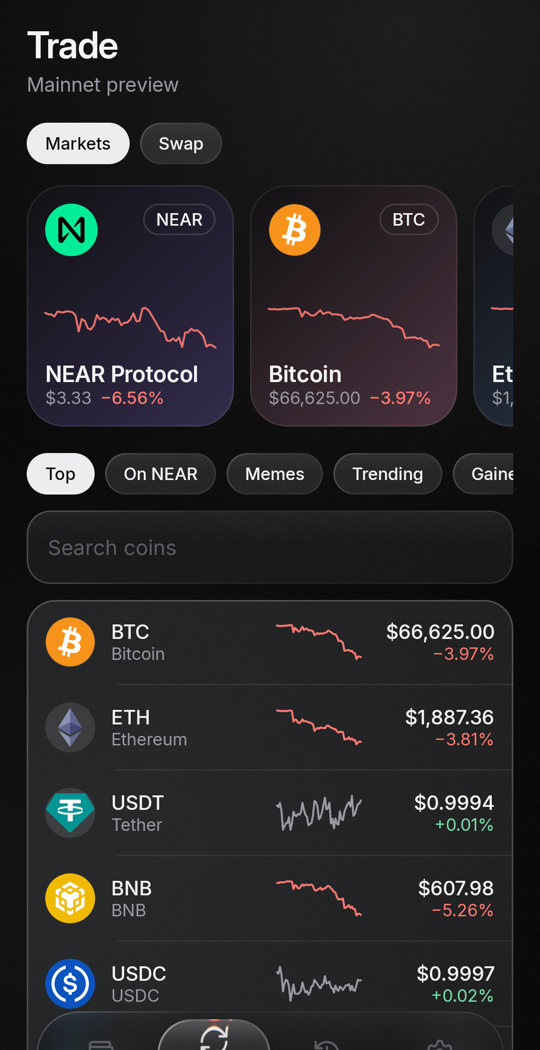
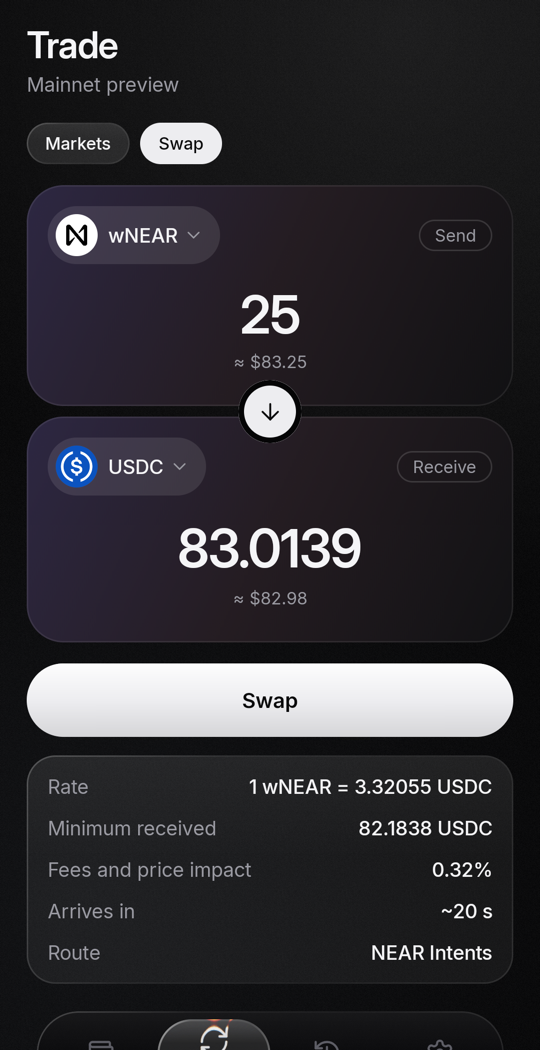
Hold NEAR and NEP-141 tokens. Swap and bridge in from other chains through NEAR Intents, inside the app. Swap on mainnet
Spending limits, delays you can cancel, one-tap freeze, watchtower alerts and inheritance, all enforced by the contract rather than the app.
Technology
A payment is simple enough to show right here.
You pick who and how much. Your phone builds the payment and the contract records it.
The card's EMV chip signs a challenge from a later block, so a signature skimmed earlier can't match. Nothing is charged and nothing reaches your bank.
A key in your phone's secure hardware signs only after a fresh fingerprint check, under a prompt that names the receiver and amount.
The contract verifies both signatures and your limits. Small payments go out instantly. Bigger ones wait a delay you can cancel.
Security & reliability
The wallet contract checks your bank card's RSA signature and your phone's P-256 signature on-chain, every time.
Every transfer needs your card and a fingerprint-unlocked phone key. Neither one can pay alone.
The card's key is made by your bank inside its EMV chip. The phone's key lives in the Android Keystore's secure hardware and can't be exported.
Payments above your instant limit wait a delay you can cancel from either key. The rules live in the contract, not in the app.
Lost your card or phone? Either key on its own can freeze the wallet. Unfreezing needs both.
Losing a card or a phone shouldn't mean losing your money.
The app
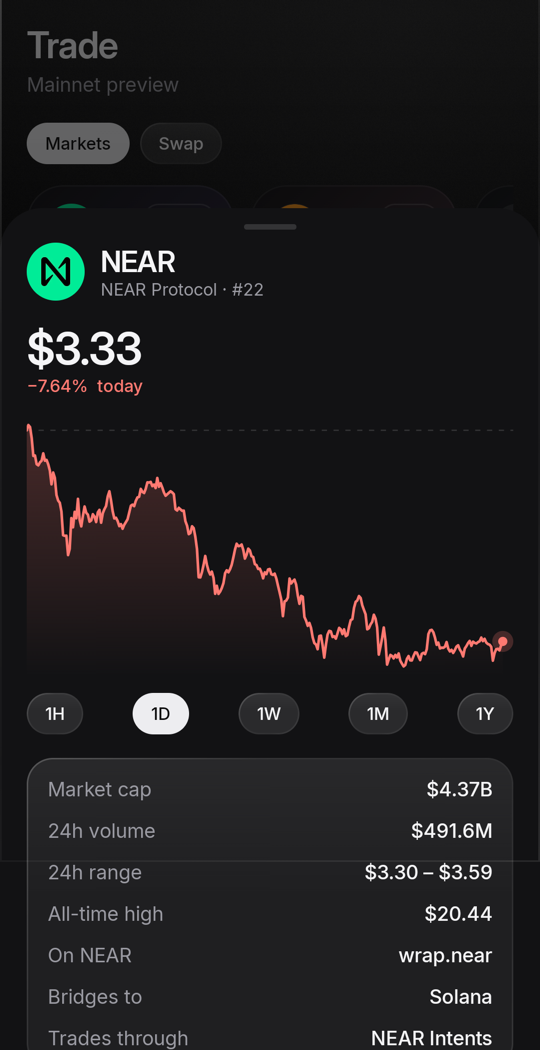
Markets, swaps, tokens and your security settings, built for one-handed use.
Open source
The wallet contract, the card code and the app are on GitHub. Aegis runs no server between you and NEAR: your phone talks to the chain directly.
View on GitHub →Where we are
No. Aegis asks the chip for the same kind of signature a payment terminal uses to check that a card is genuine. No PIN is entered, no payment is made, and nothing is sent to your bank or the card network. The chip's own transaction counter does go up by one, as with any contactless tap.
Not on its own. A card signature never moves funds without your phone's fingerprint approval. And the card signs a challenge taken from a block after the payment was recorded, so a signature skimmed earlier is useless.
Freeze the wallet from your phone, then remove the lost card using your backup card. If you have no backup card yet, add one: one is enough, and it should stay at home.
Install Aegis on a new phone and start a recovery with your cards. Recovery waits 24 hours, so your old phone or a guardian can cancel it if it wasn't you.
No. The card number, track data and cardholder name stay inside the tap session in the phone's memory and are never logged, stored or sent. The app keeps only the last four digits to show you which card is which.
Contactless EMV bank cards. Aegis supports the three ways cards prove they're genuine: Visa fDDA, Mastercard CDA and classic DDA. Settings → Check a card tells you whether yours can sign before you set anything up.
Yes. Your wallet is a contract on your own NEAR account, and the app talks to public NEAR RPCs. There is no Aegis server in the path, and the code is open source.
Not yet. Aegis is on NEAR testnet. Mainnet opens after testing with real bank cards and an independent contract review.
Aegis for Android, on NEAR testnet. Needs a phone with NFC and a screen lock.